
Black Streaks on Render: What They Mean
Black streaks are often signs of biological growth encouraged by damp autumn weather. Learn why they form and how render can be cleaned safely.
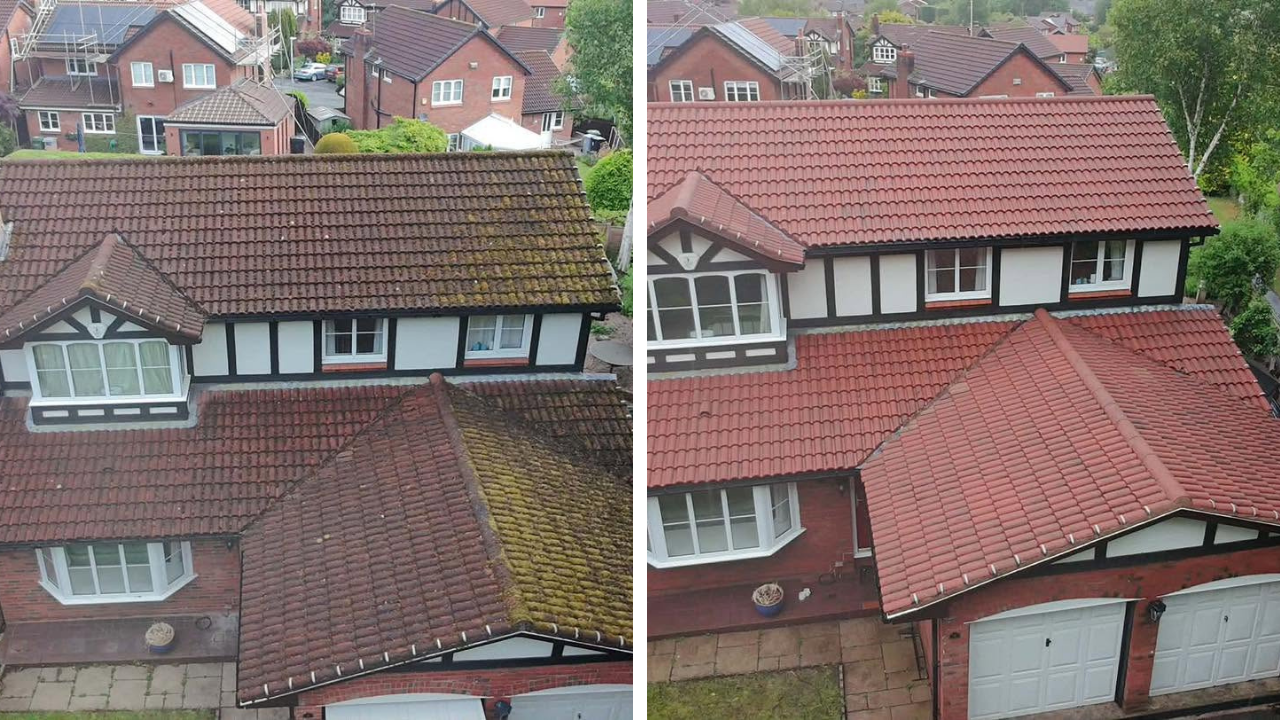
Black streaks on modern render are more than a cosmetic nuisance. They often show where moisture and organic growth have settled, particularly during a damp Greater Manchester autumn.
What causes black streaks on render?
The dark marks seen on K-Rend, silicone and monocouche finishes are commonly linked to algae, fungi and other microscopic growth. These organisms settle on the surface and form a thin biological film, trapping airborne dirt and making the discolouration look darker.
Manchester’s mild, wet climate provides favourable conditions. Autumn brings longer periods of dampness, fewer hours of sunlight and leaf debris collecting around rooflines, window ledges and adjoining surfaces.
Several factors can contribute to black streaks:
- Rainwater routes: Water running from sills, parapets, roof edges or overflowing gutters can create clear vertical lines.
- Shaded elevations: North-facing walls and areas behind trees tend to dry more slowly.
- Textured finishes: Small hollows in the render can hold moisture, dust and organic particles.
- Nearby vegetation: Trees and shrubs can reduce airflow while depositing pollen and debris.
- Pollution: Traffic residue and general airborne dirt can become caught within the biological film.
The streaks do not always mean the render itself has failed. However, persistent damp marks can point to maintenance issues such as blocked gutters, leaking joints or poorly directed rainwater.
Why are the marks worse in autumn?
Render needs time, sunlight and moving air to dry. During autumn, cooler temperatures and repeated showers mean shaded walls can remain damp for much of the day. This allows existing growth to spread and makes older staining more visible.
Black streaks often appear beneath window corners, coping stones, vents and roofline details. These are places where water follows the same route after every shower. If a gutter is leaking or overflowing, the affected area may become noticeably darker than the surrounding wall.
Properties near trees, busy roads or open green spaces can also collect more organic material and airborne contamination. Homes throughout Greater Manchester may therefore develop different staining patterns, even when neighbouring properties have a similar render finish.
Practical tip: Check whether a black streak becomes darker after rain. A clear water trail may indicate that a gutter, joint, sill or roofline detail should be inspected alongside the render.
How low-pressure hot steam treats black growth
Modern thin-coat and coloured renders need a controlled approach. ProClean Manchester uses low-pressure hot steam and softwash methods for render cleaning, with the process adjusted to suit the finish, age and condition of the wall.
Heat helps loosen surface contamination without relying on excessive force. Where appropriate, a carefully selected softwash treatment is applied to weaken remaining organic growth. Residual discolouration can then release and weather away over time rather than being forced from the surface.
A typical visit may include:
- Inspecting the render type, staining pattern and surrounding drainage.
- Checking for cracks, loose areas, damaged seals and existing repairs.
- Protecting nearby windows, doors, plants and adjoining materials.
- Testing a discreet area to confirm the correct temperature and treatment strength.
- Applying low-pressure hot steam and softwash treatment in controlled sections.
- Rinsing carefully and reviewing areas where runoff has repeatedly tracked down the wall.
K-Rend, silicone and monocouche products can vary in texture, colour and condition. There is no single setting or treatment strength that suits every elevation, which is why an inspection and test area matter.
Can black streaks be prevented from returning?
No exterior wall stays permanently free from organic growth, especially in a wet climate. However, correcting the moisture source and arranging suitable maintenance can slow its return.
Useful steps include:
- Keeping gutters and outlets clear through autumn.
- Repairing leaking joints and poorly directed downpipes.
- Trimming dense vegetation to improve light and airflow.
- Checking seals and cracks before winter weather arrives.
- Cleaning early staining before it spreads across a larger area.
If a dark mark is caused by an active leak, cleaning alone will not solve the underlying issue. Brad will point out visible concerns during the initial assessment so they can be addressed before or alongside the render cleaning service.
Prices depend on the property, including access, wall area, render condition and the level of staining. A tailored quote is provided after reviewing the work required.
Concerned about black streaks on your home? Read about our render cleaning service or request a quote from Brad.