Why you should clean moss from your roof
Moss looks harmless on a roof, but left alone it lifts tiles, blocks gutters and shortens the life of your roof. Here's what it does — and how to remove it safely.
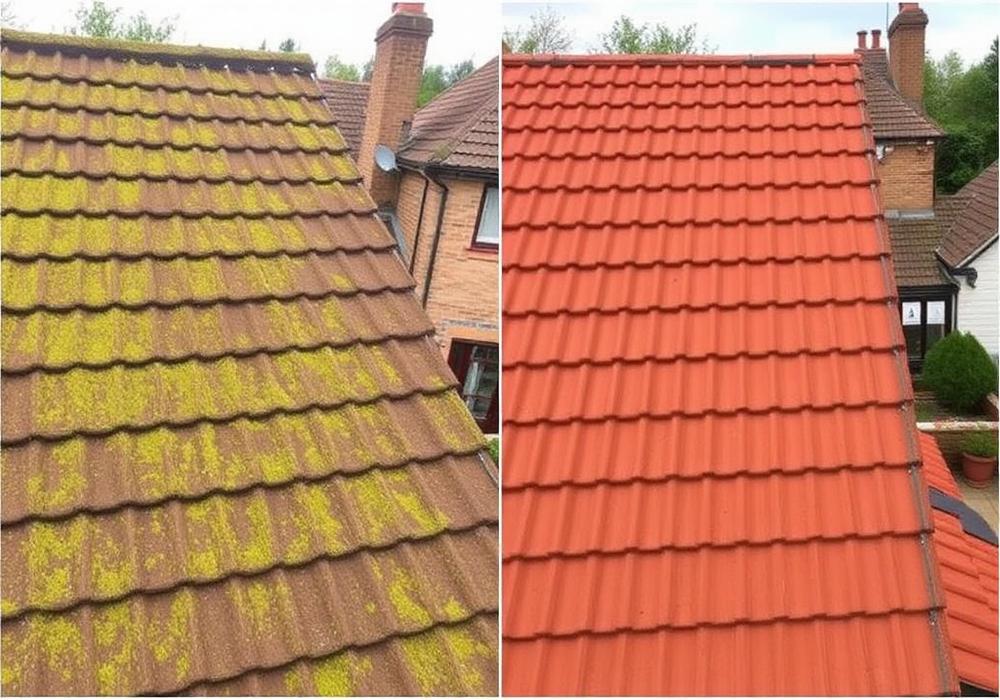
Moss on a Manchester roof looks harmless — a bit of green softness up top. In reality it's one of the most damaging things that can grow on a home in our climate, and by the time you can see it clearly from the street it's usually been there for years.
What moss actually does to a roof
Moss behaves like a sponge. It holds rainwater against the porous top layer of your tiles for days at a time. In summer that moisture rots the surface; in winter it freezes, expands, and cracks the tile from the inside out. The finer root system also lifts the leading edge of each tile just enough to let wind-driven rain track underneath.
Left long enough, three things happen — usually in this order:
- Granule loss. The protective coating on concrete tiles wears away, so tiles fade and become brittle.
- Blocked gutters and downpipes. Moss breaks off in clumps every autumn and slides straight into the guttering.
- Water ingress. Once tiles crack or lift, water finds the felt below — and eventually the ceiling.
Signs it's time to act
You don't need to climb up to tell if it's a problem. From the ground, look for:
- Visible green or brown patches, especially on the north-facing slope
- Clumps of moss sitting in the gutter or on the driveway after rain
- Dark streaks running down the tiles from the ridge
- A gutter that overflows in heavy rain despite being cleared last year
How we remove it — safely with steam
The wrong approach here is expensive. High-pressure jet washing on a roof strips the tile coating, forces water under tiles, and can void manufacturer warranties. We use a low-pressure hot steam softwash system designed for roofs and delicate substrates:
- Hot steam treatment. Low-pressure, high-temperature steam is worked across the tiles from a scaffold or roof ladder. The heat lifts moss, lichen and algae from the surface without hammering the tile.
- Roof-safe softwash solution. A gentle treatment is applied to weaken any remaining organic growth so it releases naturally over the following weeks.
- Gentle low-pressure rinse (when appropriate). Only if the tile type allows it, and always at low pressure directed down the slope.
- Gutter, fascia & soffit clean-up. Everything that comes off the roof is cleared from the gutters, and the fascias and soffits are wiped down so the whole roofline looks finished — not left for you to deal with.
A properly steam-softwashed roof stays clean for years. A jet-washed roof often looks worse within 12 months because the damaged tile surface holds moss even better than before.
What NOT to do
- Don't jet wash the roof yourself. The damage is usually invisible until the next hard freeze.
- Don't use household bleach. It runs off onto brickwork and kills plants below.
- Don't ignore the north slope. It gets the least sun and the most moss — treatment there is what actually keeps the roof clean long term.
Aftercare and prevention
Once treated, a roof needs very little maintenance. A quick visual check each spring and an annual gutter clear is usually enough. If your roof faces heavy tree cover, we can also fit discreet copper strips along the ridge — rainwater carries a trace of copper down the tiles and helps slow new growth taking hold.
If you've spotted moss on your roof and want a straight answer about whether it needs treating now or can wait, we're happy to take a look. See our full roof cleaning process or request a free quote — we cover all of Greater Manchester.